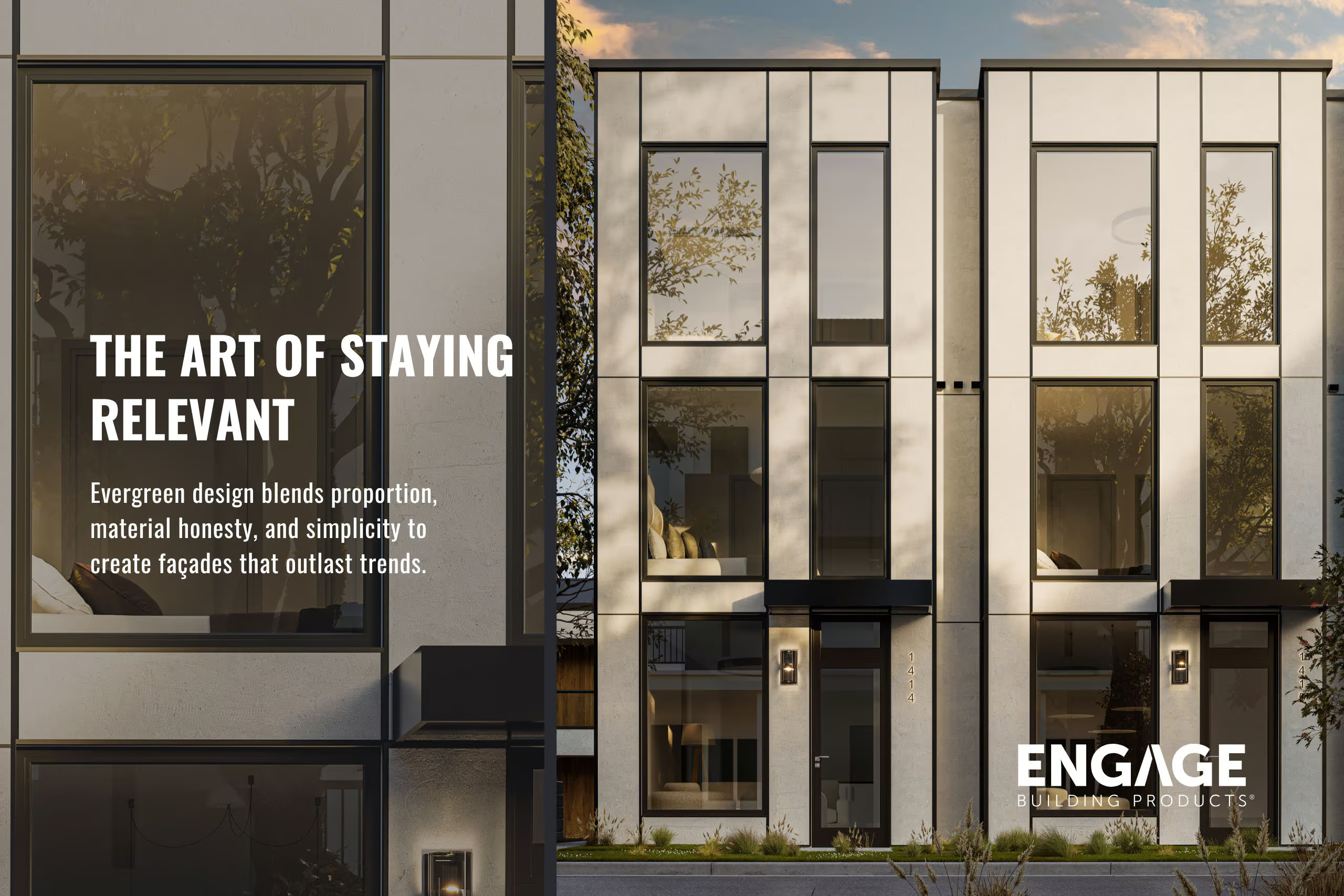
What Is an “Evergreen” Architectural Look and Why It Protects Your Investment
Intro
In real estate, trends come and go, but time always tells the truth.
When investors and developers talk about an evergreen architectural look, they’re referring to a building that maintains its visual relevance and market appeal for decades. A property with an evergreen aesthetic signals quality, stability, and long-term value to tenants and buyers alike. It ages gracefully, protects resale potential, and keeps your portfolio competitive long after trend-driven projects start to feel outdated.
1. What “Evergreen” Really Means in Real Estate
An evergreen building design doesn’t follow the market — it outlasts it.
It’s defined by proportion, durability, and restraint. These are façades that hold their appeal over time through clean lines, balanced materials, and consistent detailing.
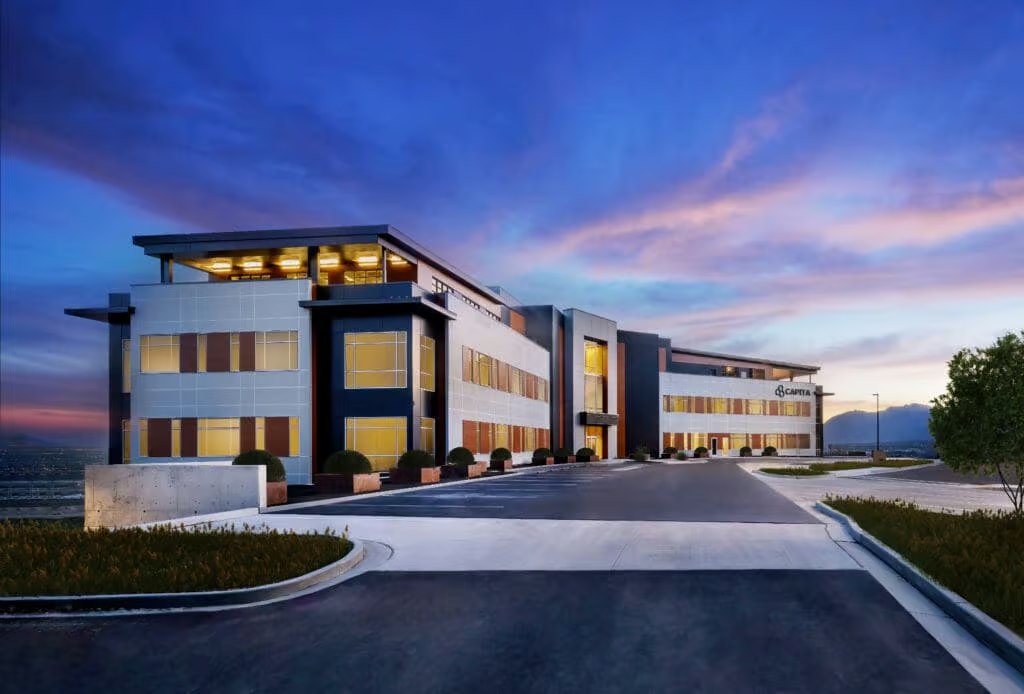
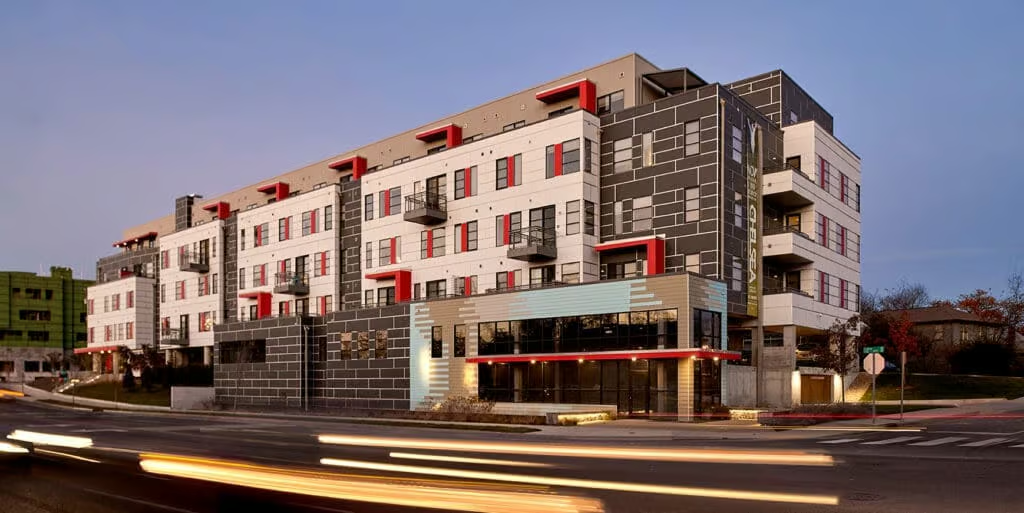
Think of metal, glass, and stone working together in a way that feels modern today and appropriate decades from now — contemporary without being cold, distinctive without feeling dated. The goal isn’t to capture attention for a moment; it’s to maintain relevance, value, and confidence for the long term.
This design is engineered for decades of desirability.
2. Why Investors Care About Architectural Longevity
Institutional buyers and underwriters evaluate something called design obsolescence risk — the likelihood that a building will start to look old before it wears out.
Here’s why it matters to your bottom line:
• Outdated façades demand early renovations or full re-clads.
• Timeless designs maintain curb appeal and occupancy, supporting rental rates.
• Predictable maintenance creates smoother cash flow and higher resale value.
• Outdated façades demand early renovations or full re-clads.
• Timeless designs maintain curb appeal and occupancy, supporting rental rates.
• Predictable maintenance creates smoother cash flow and higher resale value.
In underwriting, this translates to a more stable cap rate and stronger valuation. In simple terms — buildings that stay visually relevant hold their worth longer.
3. Materials That Keep a Building “Evergreen”
The materials you choose define how gracefully your property ages.
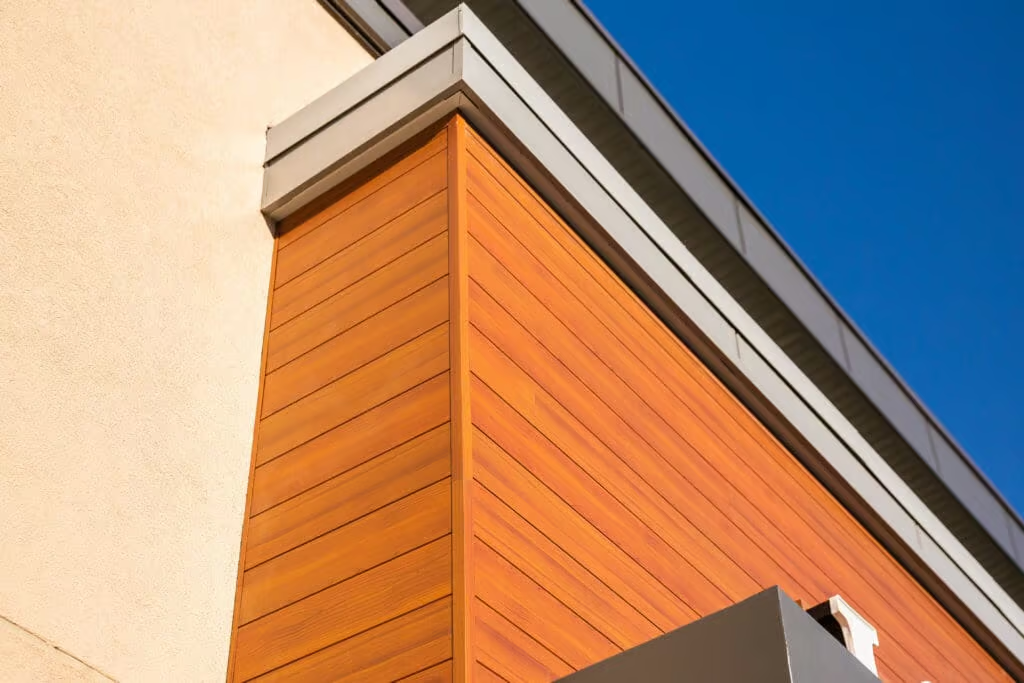
• Aluminium cladding systems maintain crisp, uniform lines that resist warping or decay.
• Powder-coated finishes prevent fading and chalking.
• Brick adds mass, texture, and enduring character, a material proven to withstand weather, wear, and changing design trends.
• Powder-coated finishes prevent fading and chalking.
• Brick adds mass, texture, and enduring character, a material proven to withstand weather, wear, and changing design trends.
Choosing materials that age well is about the kind of luxury that lasts. You want a design that performs as beautifully in its twentieth year as it did on day one.
4. The Cost of Chasing Design Trends
What feels cutting-edge today can become visual clutter tomorrow.
Oversized patterns, hyper-industrial detailing, or fashion-driven colors often accelerate obsolescence.
Oversized patterns, hyper-industrial detailing, or fashion-driven colors often accelerate obsolescence.
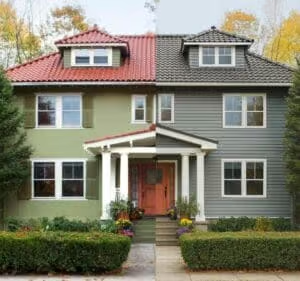
By contrast, refined simplicity (engineered precision, clean reveals, and balanced proportions) communicates permanence. It’s the same principle that makes classic automotive and product design feel modern even decades later.
5. Evergreen Design = Predictable Lifecycle Cost
Buildings that maintain their aesthetic integrity deliver:
• Fewer full-scale façade renovations or brand refreshes
• More predictable long-term CapEx
• Higher resale and refinancing value
• Stronger tenant retention through consistent visual quality
• Fewer full-scale façade renovations or brand refreshes
• More predictable long-term CapEx
• Higher resale and refinancing value
• Stronger tenant retention through consistent visual quality
Simply put, evergreen design lowers the total cost of ownership.
Discover materials engineered to perform for decades.