When you’re choosing an exterior material for a building, the first number everyone wants to know is usually the same:
How much does it cost?
It’s an important question—but it’s only part of the equation.
The material with the lowest price on installation day isn’t necessarily the material that costs the least over the life of the building. Maintenance, refinishing, repairs, labour, replacement materials and even access costs can continue adding to that original price tag for decades. That’s why a better question might be:
What will this building exterior cost over the next 30 years?
When you look at aluminum siding, wood siding and vinyl siding through that lens, the comparison starts to change.
Start With Total Cost of Ownership, Not Material Cost
A building exterior is a long-term investment. Whether you’re designing a custom home, multi-family development, or commercial property, your cladding needs to do more than look good when the project is handed over.
It needs to keep performing.
A useful way to think about the true cost of an exterior is:
Initial installation + routine maintenance + refinishing + repairs + replacement + labour and access costs = total lifecycle cost
Some of those expenses are obvious. Others have a habit of showing up five, ten or twenty years later.
A siding material that needs to be refinished, repaired, or partially replaced several times can steadily increase the building’s total cost of ownership. Those costs can become even more significant on multi-story buildings, where simply reaching the exterior may require lifts, scaffolding, additional labour and site coordination.
So, let’s look at how aluminum, wood and vinyl can compare over a 30-year period.
Wood: Beautiful, Natural and Maintenance-Intensive
There’s a reason architects and homeowners continue to love real wood.
It has warmth, texture and natural variation that are difficult to replicate. On the right project, wood siding can create an incredible exterior.
But maintaining that appearance takes work.
Wood is an organic material continuously exposed to sunlight, moisture, temperature fluctuations and environmental contaminants. Depending on the species, finish, building design and exposure conditions, maintaining its intended appearance can involve cleaning, staining, painting, sealing and repairing damaged areas.
The Western Red Cedar Lumber Association, for example, recommends ongoing inspection and maintenance of cedar siding. Finished cedar eventually needs refinishing as its protective coating wears, and deteriorated coatings may require scraping, sanding, cleaning and other surface preparation before a new finish is applied.
Over 30 years, those maintenance cycles matter.
The Hidden Cost of Maintaining Wood
Imagine a large building with wood accents, several stories above grade. The stain itself may not be the biggest expense.
You also need to consider:
• Labour
• Surface preparation
• Lifts or scaffolding
• Building access
• Repairs to damaged boards
• Cleaning and mildew treatment
• Site disruption
• Reapplication of protective finishes
Repeat some combination of those expenses several times during the building’s life and the initial material price becomes only a small part of the financial picture.
Of course, wood can also be intentionally left to weather naturally. That approach can reduce refinishing requirements, but it changes the aesthetic. Real Cedar notes that unfinished Western Red Cedar will weather and lose its original colour, and that good design, installation and routine maintenance remain important for long-term performance.
In other words, wood can absolutely be a durable exterior material—but achieving and maintaining a particular finished appearance requires an ongoing commitment.
Vinyl: Lower Entry Cost With Different Long-Term Considerations
Vinyl has become a popular siding material for good reason.
It’s relatively simple to maintain, widely available and often offers a more approachable upfront cost than premium exterior materials.
And contrary to a common misconception, vinyl does not require extensive routine maintenance. The Vinyl Siding Institute recommends periodic cleaning using mild soap, water and a soft brush or garden hose.
For many residential projects, that combination of affordability and straightforward maintenance makes vinyl a practical choice.
The 30-year conversation becomes more nuanced, however, when design expectations, exposure conditions and the type of building change.
Think Beyond Cleaning
Maintenance isn’t just about washing a wall.
Over decades, the larger questions include the following:
How will the material respond to impact? How will the appearance age? Can individual damaged sections be matched years later? Does the exterior still deliver the architectural look the project was designed around?
For a straightforward residential application, those considerations may be manageable.
For a high-end residence, architectural development, or commercial project, however, the exterior is often expected to do more. Material depth, clean lines, finish consistency, and long-term visual performance become part of the value equation.
That is where choosing a material based primarily on upfront price can become limiting.
Vinyl may win the initial cost conversation on many projects.
It doesn’t automatically win the 30-year value conversation.
Aluminum: A Higher Upfront Investment Designed for Long-Term Performance
Architectural aluminum takes a different approach.
Rather than trying to minimize the initial material price, aluminum systems are designed to provide durability, consistent appearance and reduced maintenance requirements over a long service period.
That can make the upfront investment higher than some alternatives.
But remember: we’re not comparing Day One.
We’re comparing Year 30.
Aluminum does not rot like an organic material, does not require routine painting or staining to preserve a wood-look finish and can be engineered specifically for long-term exterior exposure.
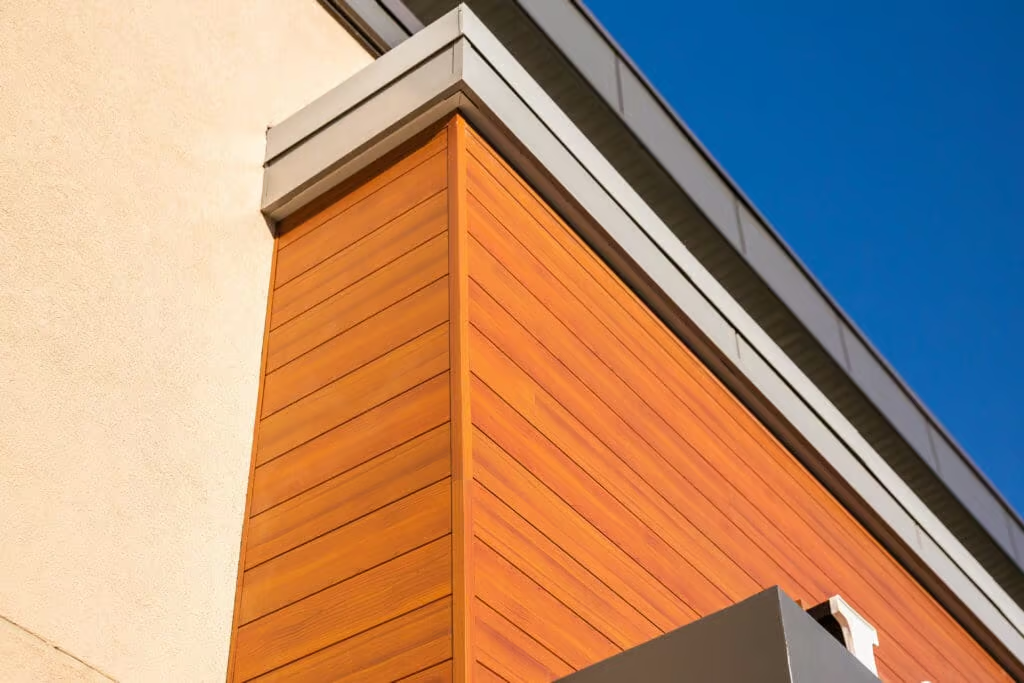
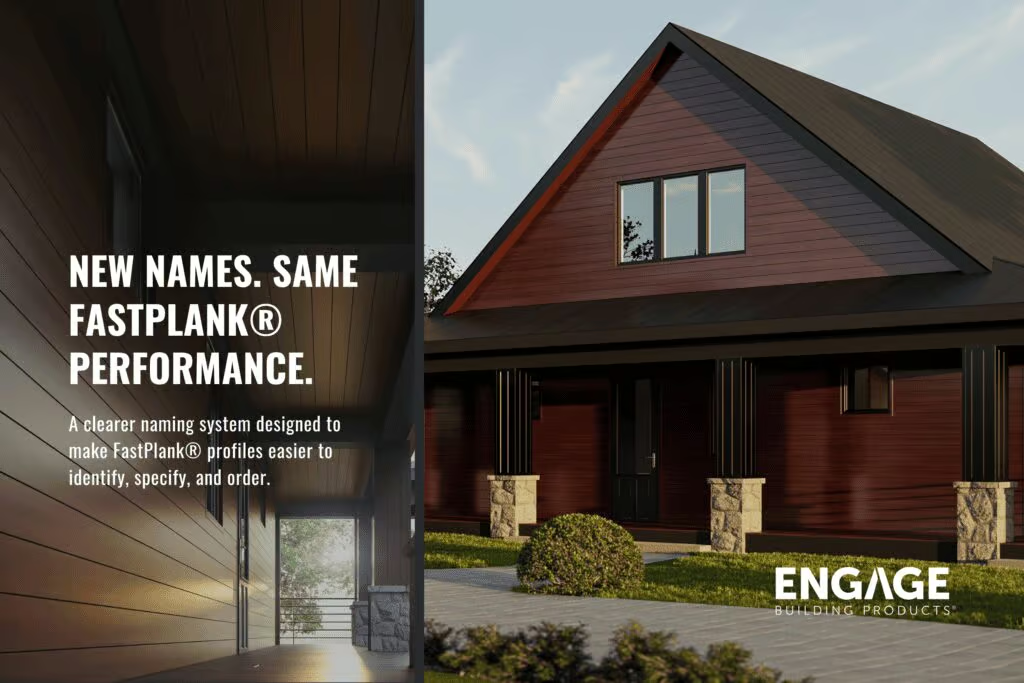
Engage Building Products’ FastPlank® system, for example, uses heavy-gauge extruded aluminum and is available in woodgrain textures and solid colours, allowing designers to achieve the warmth and character associated with wood without introducing the same refinishing requirements.
Routine care is also straightforward. Engage recommends simple cleaning for FastPlank, while its current warranty program includes a 20-year finish warranty and 50-year product warranty.
That warranty extends well beyond the 30-year timeframe we’re considering here.
And that matters when you’re thinking in terms of lifecycle value.
What Does the 30-Year Comparison Actually Look Like?
There isn’t one universal dollar figure that applies to every project.
Material pricing changes. Labour rates differ between markets. Building height, design complexity, climate, installation details and accessibility can all dramatically affect costs.
But the types of expenses you should plan for are much easier to compare.
| 30-Year Cost Factor | Aluminum | Wood | Vinyl |
| Initial investment | Typically higher | Varies by species and design | Typically lower |
| Routine cleaning | Low | Low to moderate | Low |
| Painting/staining | Typically not required | Often required if maintaining a finished appearance | Typically not required |
| Moisture/rot concerns | Does not rot | Requires careful moisture management | Does not rot |
| Long-term finish upkeep | Low | Can be significant | Generally low |
| Repair exposure | Project-dependent | Project-dependent | Project-dependent |
| Access costs for recurring finish work | Minimal | Potentially significant | Minimal |
| Architectural wood-look options | Available | Authentic natural wood | Available in selected styles |
| 30-year cost predictability | High | More maintenance-dependent | Moderate to high |
The important word here is predictability.
An exterior that requires fewer interventions gives owners a clearer picture of future operating costs.
That has value.
The Cost of Maintenance Gets Bigger as Buildings Get Bigger
Lifecycle cost becomes especially important on commercial, institutional and multi-family projects.
Refinishing the exterior of a single-storey residence is one thing.
Maintaining material several storeys in the air is another.
Suddenly, a relatively straightforward maintenance job can require:
- Boom lifts
- Scaffolding
- Safety systems
- Specialized crews
- Temporary closures
- Tenant or occupant coordination
- Additional project management
The material itself may represent only one portion of the maintenance bill.
Access can become the expensive part.
That makes low-maintenance exterior systems especially valuable in locations that will be difficult or costly to reach again.
Choosing a durable exterior material during construction can mean avoiding a much larger maintenance project later.
There’s Also a Cost to Changing the Design
Lifecycle discussions tend to focus on maintenance and repairs, but there’s another factor worth considering: appearance over time.
If a building was designed around rich wood tones, crisp reveals and clean architectural lines, what happens when the finish changes?
Owners then face another decision.
Accept the new appearance—or spend money restoring the original one.
Architectural aluminum provides another option.
FastPlank is designed to replicate the aesthetic of wood using durable aluminum planks available in woodgrain and solid-colour finishes. Engage describes its exterior solutions as engineered for long-term durability and low-to-no maintenance while maintaining the intended architectural appearance.
For projects where the design needs to continue looking intentional years after completion, that consistency has real value.