Is Your Home at Risk? The Truth About Non-Fire-Rated Siding Materials
The Question Homeowners Keep Asking
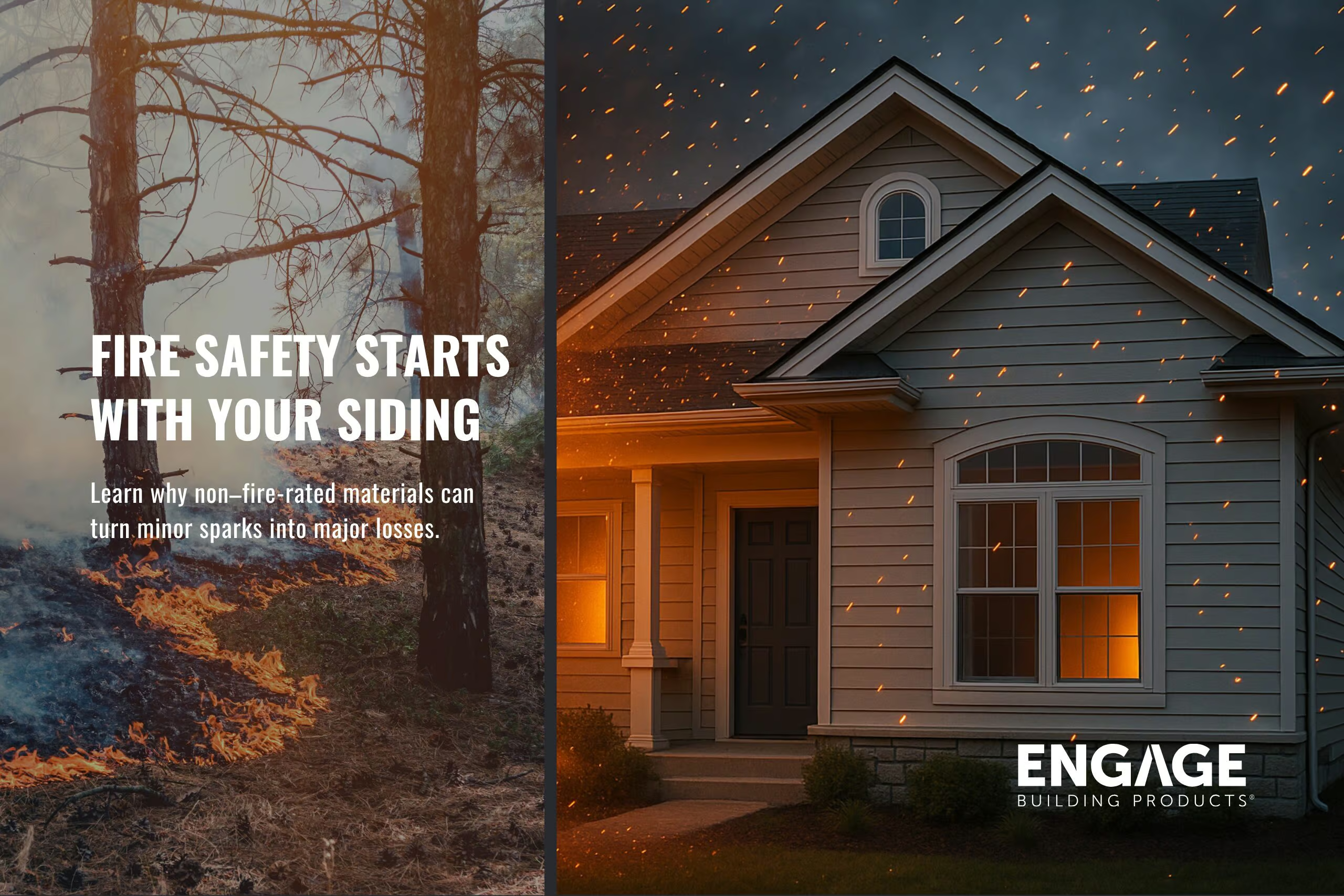
“Does the type of siding on my house really affect the safety of my home?” It’s not just marketing.
The truth is: some siding materials can ignite, melt, or spread flames. While others are engineered to resist fire completely.
As wildfires, insurance costs, and code requirements rise across North America, the difference between the two can mean thousands of dollars in premiums—or worse, the loss of your biggest investment.
Let’s look at what non-fire-rated siding really means, which materials are most vulnerable, and what you can do about it.
1. Fire-Rated vs Non-Combustible
When manufacturers call their siding “fire-rated,” they’re referring to a laboratory test called ASTM E84, which measures how fast flames spread across the surface. The rating system for this test is as follows, with Class A being the highest rating and Class C being the lowest:
• Class A: Flame Spread Index 0–25 (the highest rating)
• Class B: Flame Spread Index 26–75
• Class C: Flame Spread Index 76–200
• Class B: Flame Spread Index 26–75
• Class C: Flame Spread Index 76–200
A Class A rating demonstrates that a product resists flame spread and contributes very little fuel—a strong indicator of surface fire performance. However, ASTM E84 evaluates only a small sample in controlled conditions, not a full exterior wall exposed to real wind or radiant heat.
For exterior applications, codes reference NFPA 285 (U.S.) and CAN/ULC-S134 (Canada)—full-scale wall-assembly fire tests that measure how a complete system performs during a fire. These tests evaluate vertical and lateral flame spread through all layers of the wall.
Non-combustible materials, such as aluminium or fiber cement, go a step further. They do not ignite or produce fuel, offering the highest level of fire resistance and long-term safety for residential and commercial façades.
2. The Hidden Risks of Non-Fire-Rated Siding
IVinyl (PVC) Siding
• Begins to soften around 160 °F and deform around 165–170 °F.
• Can release hydrogen chloride gas when burning — a toxic irritant.
• Flames can leap to eaves or soffits, carrying fire into the attic.
• Begins to soften around 160 °F and deform around 165–170 °F.
• Can release hydrogen chloride gas when burning — a toxic irritant.
• Flames can leap to eaves or soffits, carrying fire into the attic.
Engineered Wood or Composite Wood
• Often rated Class B or C, meaning it can ignite and contribute fuel.
• Requires frequent repainting or sealing to maintain limited protection.
• Embers can lodge under laps or trim joints.
• Often rated Class B or C, meaning it can ignite and contribute fuel.
• Requires frequent repainting or sealing to maintain limited protection.
• Embers can lodge under laps or trim joints.
Traditional Wood
• Combustible by nature; some species ignite under 400 °F.
• Even “fire-retardant-treated” wood eventually loses surface protection from UV and moisture.
• Insurance carriers may surcharge for homes with large combustible exteriors in wildfire zones.
• Combustible by nature; some species ignite under 400 °F.
• Even “fire-retardant-treated” wood eventually loses surface protection from UV and moisture.
• Insurance carriers may surcharge for homes with large combustible exteriors in wildfire zones.
ACM (Aluminum Composite Material) Panel (Fire-Rated)
• Mineral-filled core meets NFPA 285 and CAN/ULC-S134 standards.
• Provides high fire resistance while maintaining a modern, architectural appearance.
• Commonly specified in commercial and multifamily buildings for its clean lines and Class A fire performance.
• Mineral-filled core meets NFPA 285 and CAN/ULC-S134 standards.
• Provides high fire resistance while maintaining a modern, architectural appearance.
• Commonly specified in commercial and multifamily buildings for its clean lines and Class A fire performance.
Fiber Cement, Aluminum Plank, and Solid Aluminum Plate (Non-Combustible)
• Classified as non-combustible per ASTM E136 / CAN-ULC S114.
• Won’t ignite, melt, or spread flames.
• Qualify for “Ignition-Resistant” construction in many wildfire-zone building codes.
• Classified as non-combustible per ASTM E136 / CAN-ULC S114.
• Won’t ignite, melt, or spread flames.
• Qualify for “Ignition-Resistant” construction in many wildfire-zone building codes.
3. Why Homeowners Are Paying Attention
• Insurance premiums: Some carriers now penalize homes with combustible exteriors or deny coverage in wildfire-prone regions.
• Resale value: Buyers increasingly ask about “non-combustible” cladding, especially in California, Alberta, and B.C.
• Building code shifts: Local jurisdictions are adopting WUI (Wildland-Urban Interface) requirements, meaning new builds must use ignition-resistant materials.
If your siding isn’t fire-rated or listed as non-combustible, your home may not meet future requirements even if it’s legal today.
• Resale value: Buyers increasingly ask about “non-combustible” cladding, especially in California, Alberta, and B.C.
• Building code shifts: Local jurisdictions are adopting WUI (Wildland-Urban Interface) requirements, meaning new builds must use ignition-resistant materials.
If your siding isn’t fire-rated or listed as non-combustible, your home may not meet future requirements even if it’s legal today.
4. How to Check Your Home’s Risk
✅ Step 1: Look for the manufacturer label on your siding (inside the garage or near the foundation).
✅ Step 2: Search the brand + model + “ASTM E84” or “E136” online.
✅ Step 3: Ask your insurer whether your current cladding affects your policy class.
✅ Step 4: Have a qualified contractor confirm if your exterior wall assembly includes a fire-rated barrier, fire-rated cladding, or non-combustible cladding.
✅ Step 2: Search the brand + model + “ASTM E84” or “E136” online.
✅ Step 3: Ask your insurer whether your current cladding affects your policy class.
✅ Step 4: Have a qualified contractor confirm if your exterior wall assembly includes a fire-rated barrier, fire-rated cladding, or non-combustible cladding.
If your siding burns, melts, or warps under heat, then now is the time to start planning an upgrade.
5. How Fire-Rated and Non-Combustible Cladding Protects Your Home
Modern systems, such as aluminum, don’t just resist ignition; they stop the fire’s path before it spreads in the following ways:
• Reflect radiant heat instead of absorbing it
• Protect framing and insulation from flame penetration
• Maintain shape and structure under high heat
• Stay eligible for insurance and resale compliance
• Protect framing and insulation from flame penetration
• Maintain shape and structure under high heat
• Stay eligible for insurance and resale compliance
6. What to Ask Before You Replace Your Siding
1. Is this product fire-rated, or does it meet ASTM E136 or CAN-ULC S114 non-combustibility standards?
2. Has the full wall assembly passed NFPA 285 / CAN-ULC S134 testing?
3. What is the finish warranty?
4. Will this choice affect my insurance premiums or improve resale?
Bring these four questions to your contractor or builder before you sign the quote.
Ready to Upgrade to Fire-Rated Protection?
Get expert advice on aluminum systems engineered to meet modern fire-safety standards.